Choosing the Right Size Well Pump for Your Home
Picking the right size Well Pump might sound simple, but honestly, it’s a little trickier than you’d expect. Most people assume bigger is better, or they pick the first model they see at a local hardware store. The thing is, choosing the wrong Pump can lead to all sorts of headaches—low water pressure, running out of water during peak use, or even damaging your Well system. I’ve seen homeowners completely over- or under-buy, and trust me, it’s not fun to fix later. In this guide, we’ll break down the main factors to consider so you can pick a Pump that matches your household’s water needs without overspending.
Understanding Your Household Water Demand
The first step is knowing how much water your household actually uses. It’s not just about the number of people living in your home. Think about the number of bathrooms, showers, washing machines, dishwashers, and even irrigation systems. If you’ve got a large garden or a pool, that adds to your daily demand. On average, a family of four uses about 400 to 600 gallons per day, but this can vary widely depending on lifestyle. Basically, more people or higher water use means a bigger Pump—but there’s a limit to how much your Well can handle, which brings us to the next point.
Well Capacity and Depth
Not all Wells are created equal. Some are shallow, some are deep, and the amount of water they can provide consistently is key. A Well’s yield, measured in gallons per minute (GPM), is a critical factor. You can’t just install a Pump that’s too powerful for a slow-yielding Well; you’d end up running the Pump dry, which can damage it. I’ve worked with a few homes where the Pump was just too aggressive for the Well, resulting in low water levels and short cycling. Short story: always check your Well’s depth and GPM before buying a Pump. Your local Well company can do a simple test if you’re unsure.
Pump Type Matters
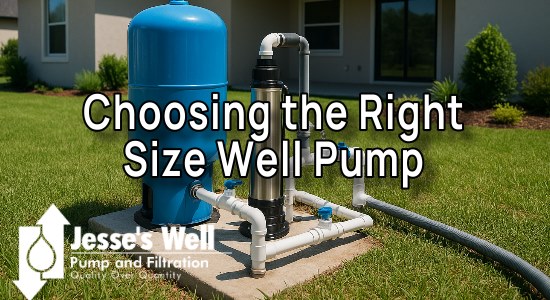
There are a few different types of Well Pumps, each with its pros and cons. The most common are submersible Pumps and jet Pumps. Submersible Pumps sit inside the Well and push water up, while jet Pumps sit above ground and pull water up. Submersible Pumps are usually more efficient for deep Wells, while jet Pumps are better for shallow Wells. Honestly, choosing the right type can save a lot of trouble later, so it’s worth taking a little time to match Pump type with your Well’s characteristics.
Calculating Pump Size
Pump size is usually rated in gallons per minute (GPM). Here’s a simple way to think about it: first, determine your peak water demand. Let’s say your family uses around 15 gallons per minute during peak times (showers, dishwasher, washing machine). Then check your Well’s yield. Ideally, your Pump should match or slightly exceed peak demand but not exceed the Well’s sustainable output. Oversizing is tempting, but it can shorten your Pump's life and wear out your system. Undersizing, on the other hand, leaves you scrambling when everyone takes a shower at once.
Pressure Requirements
Water pressure is another consideration. Most homes operate comfortably at 40 to 60 PSI, but if you’ve got multiple stories or sprinklers, you may need a higher-pressure system. Make sure your Pump can maintain consistent pressure under peak usage. A pressure tank can help smooth out fluctuations, but the Pump itself needs to be capable of meeting your household’s highest demands.
Other Factors to Consider
- Voltage and Electrical Requirements: Check that your electrical system can handle the Pump. Some larger Pumps need a 220-volt supply.
- Pipe Size: A larger Pump may require bigger pipes to deliver water efficiently.
- Climate and Water Quality: Freezing temperatures or hard water can affect Pump performance and lifespan.
- Maintenance: Some Pumps are easier to service than others. Submersible Pumps are generally low maintenance, but if something goes wrong, repairs can be more complicated.
Signs You Might Need a New Pump
Even with an appropriately sized Pump, wear and tear happen. Low water pressure, strange noises, or frequent cycling are usually signs that something isn’t right. If your Pump struggles to meet your household’s water demand, it may be undersized, or your Well may need attention. I’ve also noticed that older Pumps often lose efficiency over time, so even if it worked fine years ago, it might not work as well today.
Professional Advice is Worth It
Honestly, nothing beats talking to a professional. A licensed Well Pump installer can evaluate your household’s water use, measure Well capacity, and recommend a Pump that balances performance and longevity. Trying to wing it by guessing the size is tempting, but it usually ends up costing more in repairs and frustration. I’ve seen people save a lot of money and hassle just by having a pro run the numbers before buying a Pump.
Final Thoughts
Choosing the right size Well Pump is really about balance. You want a Pump that can meet your household’s peak water demand without overworking your Well or risking early Pump failure. Factor in Well depth, type, pressure requirements, and peak water usage, and always consult a professional if you’re unsure. It might seem like a lot, but taking the time to get it right ensures reliable water for years to come, which is worth the effort.