
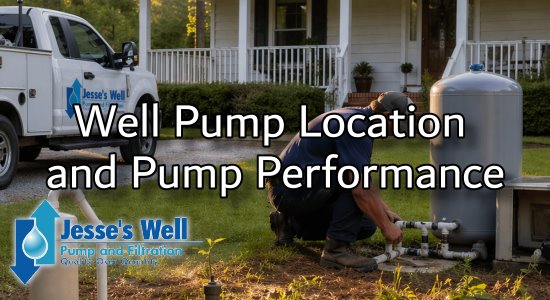
How Pump Placement Affects Well Water Flow
Most homeowners do not think much about well pump location until something starts acting strange. The water pressure drops. The pump runs longer than it should. A faucet spits air now and then. Or worse, the system stops giving water altogether. At that point, people usually start wondering about the pump itself, the pressure tank, the wiring, the well depth, or the age of the equipment. And those things matter, of course. But the thing is, well pump location can quietly affect almost everything about how the system performs.
In my experience, people tend to think of a well pump as one separate part, almost like an appliance. It either works or it does not. But a well pump is really part of a whole water delivery setup. Where that pump sits, how far it is from the home, how deep it is, how protected it is, and how easy it is to reach can all make a difference. Well pump location is not just about convenience. It can affect water pressure, pump life, service access, noise, electrical efficiency, and even how quickly a problem gets found.
For homes around Columbia, Lexington, Gaston, Swansea, Pelion, and the surrounding South Carolina areas, this can be especially important. We have different soil conditions, heat, humidity, storms, long driveways, older rural properties, and plenty of homes that rely on private wells. A well pump location that made sense years ago may not be ideal anymore, especially if the property has been added onto, landscaped, or changed over time.
Well Pump Location Affects Water Pressure
Water pressure is usually the first thing people notice when a well system is struggling. Maybe the shower feels weak. Maybe the washing machine takes longer to fill. Maybe the pressure seems fine until someone turns on another faucet. A lot of things can cause that, but well pump location can be one of the hidden factors.
If the pump has to push water a long distance from the well to the house, that distance can matter. The longer the run, the more resistance the system has to deal with. Pipe size, elevation, bends, fittings, and the distance from the pump to the pressure tank can all play a part. A well pump location that is too far from the main demand point may force the system to work harder than it should.
This does not always mean the pump was installed wrong. Sometimes the home was built one way, then the property changed. Maybe an addition was added. Maybe irrigation was tied into the system. Maybe a shop, barn, or second structure started using water too. Suddenly, the original well pump location is serving more than it was planned for.
That is why water pressure problems should not be guessed at. A good technician looks at the full setup. The pump may be fine, but the layout may be making it act tired. Or the pump may be aging because the location and demand have been forcing it to work harder for years.
Distance From the Home Can Change Pump Workload
A well pump does not just move water. It moves water under pressure. That is a big difference. When the well pump location is far away from the house, the pump may need to overcome more friction loss before water reaches the pressure tank and plumbing fixtures. Add a few turns in the line, a slight uphill grade, or older piping, and the workload can increase.
Honestly, this is one of those things that does not sound like a big deal until you see it in real life. A pump that should be cycling normally may run longer because the system is fighting distance and resistance. Longer run times create more wear. More wear can shorten pump life. Then the homeowner ends up replacing parts without really understanding why the system wore out faster than expected.
That is why well pump location and performance go together. If the location is not ideal, the system may still work, but it may not work as smoothly or as efficiently as it could. It is kind of like driving with low tire pressure. The car still moves, but everything is working harder than it needs to.
Pump Depth Matters Too
When people hear well pump location, they often think about where the wellhead is in the yard. That matters, but the pump location inside the well matters too. Submersible pumps are placed down inside the well, and the depth has to match the water level, well construction, recovery rate, and demand from the home.
If a pump is set too shallow, it may struggle when the water level drops. If it is set too deep without the right planning, it may create unnecessary strain or complicate service. There is a balance. The pump needs to sit where it can get reliable water, but it also needs to match the system design.
This is one reason a proper well pump installation should not be treated like a quick swap. If a pump failed, the replacement should be matched to the well and the home. The well pump location inside the casing should be considered along with horsepower, flow rate, pressure needs, and the condition of the water line. Scratch that, not just considered. It should be part of the whole decision.
Access Makes Repairs Faster And Usually Cleaner
Another big part of well pump location is access. If the pump, pressure tank, controls, or wellhead are hard to reach, service can take longer. That may not matter on a pretty spring afternoon, but it matters a lot when a home has no water, it is raining, and everyone in the house is already frustrated.
A wellhead buried under shrubs, hidden behind fencing, boxed in by landscaping, or located where a service truck cannot reasonably reach can turn a simple repair into a bigger job. I have seen people plant around wells to make the yard look better, and I understand it. Nobody wants an ugly setup sitting out in the open. But covering the system too much can make future well pump repair harder.
A smart well pump location gives the system enough room for service. That includes room to inspect wiring, pull equipment, check the line, and work safely. The best setup is not always the one that hides everything. Sometimes the better setup is the one that can be reached quickly when something goes wrong.
- Keep the wellhead visible and easy to find.
- Do not bury access points under mulch, stone, or heavy landscaping.
- Leave room for service equipment when possible.
- Protect the area from vehicles, lawn equipment, and standing water.
- Make sure electrical controls and pressure equipment are not blocked.
Low Areas Can Create Problems Around The Well
Well pump location also matters because of drainage. A wellhead or pump area should not sit in a place where water collects after rain. Around here, we can get heavy storms that dump water fast. If the area around the well stays wet, muddy, or washed out, that is not something to ignore.
Standing water near a well can create service problems, erosion issues, and possible contamination concerns depending on the condition of the well and the surrounding area. The well system should be protected from runoff as much as possible. The ground should slope away from the wellhead, not toward it.
This is especially important on older properties where grading may have changed over time. A driveway may have been added. A yard may have settled. A drainage ditch may have filled in. The original well pump location may have been fine years ago, but now water may be moving differently across the property.
If you notice soggy ground around the well, pooling water, exposed piping, or erosion near the wellhead, it is worth having the system looked at. Sometimes the fix is not dramatic. Sometimes it is grading, protection, better drainage, or simply keeping the area clear. But ignoring it is usually not the best idea.
Heat, Weather, And Protection Matter
South Carolina weather can be rough on equipment. Heat, humidity, lightning, hard rain, and sudden cold snaps can all play a role. The well pump location should give the system reasonable protection, especially for above ground components like pressure switches, control boxes, pressure tanks, and exposed plumbing.
Submersible pumps are protected inside the well, but the rest of the system still needs attention. If controls are exposed to moisture, pests, or physical damage, the system can become unreliable. If a pressure tank is placed in a cramped or damp area, corrosion and service issues can show up earlier than expected.
A good well pump location is not just about today. It is about how that system will hold up over years of weather, use, storms, and regular wear. I have always thought this is where good installation separates itself from rushed installation. The pump may look the same on day one, but the difference shows up later.
Noise Can Be A Clue
With submersible pumps, noise is usually not a major issue because the pump is down inside the well. But some systems have above ground equipment, and the location of that equipment can affect what the homeowner hears. A pump, pressure switch, or tank installed near a bedroom wall, porch, or living area can make normal operation more noticeable.
Noise can also be a warning sign. If a system suddenly sounds different, cycles more often, clicks repeatedly, hums, rattles, or seems to run too long, the issue may be tied to pressure, controls, a failing component, or system layout. Well pump location may not be the only cause, but it can affect how quickly the problem is noticed and how easily it can be checked.
Basically, do not ignore a system that sounds different than it used to. A small change in sound can be an early clue, and early clues are usually cheaper than full failures.
Irrigation Can Change The Whole Picture
Many homeowners use well water for irrigation. That can be fine when the system is designed for it, but irrigation adds demand. If the well pump location, pump size, pressure tank, and water line were planned only for household use, adding irrigation can push the system harder.
Sprinklers, outdoor spigots, garden areas, and larger yard zones can all change performance. The pump may run longer, cycle differently, or struggle to keep steady pressure. A homeowner may think the pump is bad, when really the setup is being asked to do more than it was built to do.
Before adding irrigation or expanding outdoor water use, it is smart to have the well system checked. The well pump location, well capacity, pressure tank size, and pump performance should all be considered. It is much better to plan before adding demand than to find out later that the system is overworked.
When The Location Is Not Ideal
Not every poor well pump location requires moving the whole system. Sometimes that would be expensive, unnecessary, or just not practical. The real question is what problem the location is causing. If the issue is access, clearing the area may help. If the issue is drainage, grading may help. If the issue is distance or pressure loss, changing pipe size, controls, pump selection, or pressure settings may help.
That is why a good diagnosis matters. Well pump location should be evaluated with the entire system. A technician should look at pressure, flow, cycling, electrical supply, water line condition, pressure tank performance, and the actual needs of the home.
There is no one size fits all answer. A home in Lexington with a long driveway and irrigation may need a different setup than a smaller home in Columbia with a simple household water demand. A rural property near Gaston may have different access challenges than a newer home near Chapin. That local context matters.
Signs Your Pump Location May Be Part Of The Problem
If something feels off with your well system, well pump location may be worth looking at. Again, it may not be the only issue, but it can be part of the reason the system is not performing like it should.
- Water pressure drops when more than one fixture is used.
- The pump seems to run longer than it used to.
- The pressure switch clicks often.
- The well area stays wet after rain.
- The wellhead is hard to find or hard to reach.
- The system has trouble keeping up with irrigation.
- Water flow feels weaker in parts of the home.
- Repairs take longer because access is blocked.
These signs do not automatically mean the pump has to be replaced. They mean the system deserves a closer look. Sometimes the answer is simple. Sometimes it is not. But guessing usually wastes time and money.
A Better Location Helps The Whole System Work Easier
The best well pump location is the one that supports steady water, reasonable pressure, safe service access, good drainage, and long term reliability. It does not have to be fancy. It just has to make sense for the property and the way the water is used.
For homeowners in Columbia, Lexington, and nearby South Carolina communities, this is worth paying attention to before problems get bigger. Your well system is not just a pump in the ground. It is the equipment that keeps water moving through the home every day. When the location is right, or at least properly managed, the system usually has a better chance of doing its job without constant stress.
If your water pressure has changed, your pump is running too much, or the well area is difficult to access, do not overlook well pump location. It may be a small detail, or it may be the detail that explains why the system has been giving you trouble. Either way, having an experienced well pump repair company inspect the full setup can save a lot of guessing, and honestly, guessing is the last thing anyone wants when the house depends on well water.