Homeowners Can Test Their Water Well for Contaminants?
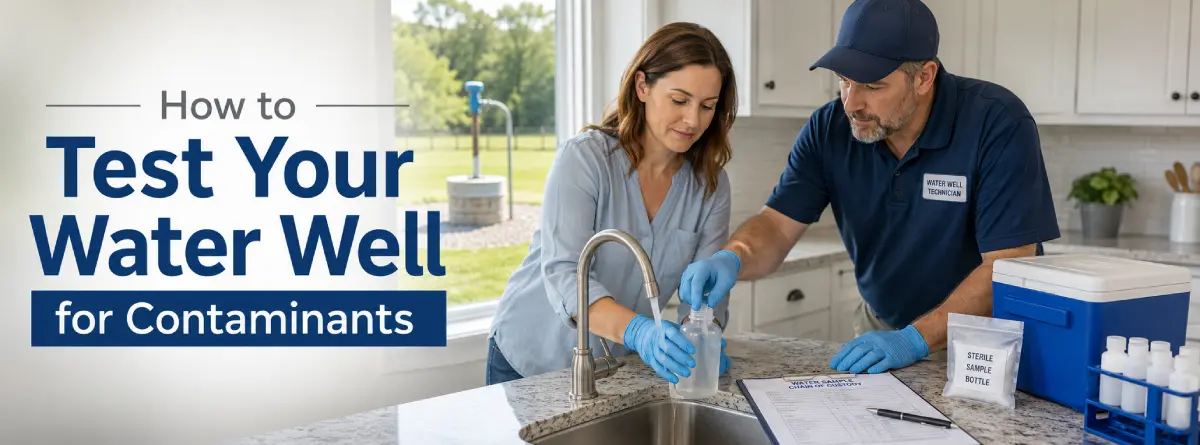
How to Test Your Water Well for Contaminants
Quick Answer: Test private well water at least once each year through a state-certified laboratory. A basic annual panel should typically include total coliforms, nitrates, total dissolved solids, and pH. Additional testing may be needed after flooding, repairs, nearby construction, changes in taste or odor, or concerns about local chemicals and minerals.
Private well water can look clear, smell normal, and taste fine while still containing something that should not be there. That is why visual inspection alone cannot tell a homeowner whether the water is safe. A proper laboratory test gives you useful information about bacteria, minerals, metals, and other substances that may be present in the well or household plumbing.
For homeowners in Columbia, Lexington, Gaston, and nearby South Carolina communities, testing is also a practical way to understand whether a water problem begins in the groundwater, the well structure, the pump system, the pressure tank, the plumbing, or an existing treatment unit. The test result is not the entire diagnosis, but it gives you a much better place to start.
Why Private Well Testing Is the Homeowner's Responsibility
Public water systems are routinely monitored under government requirements. A private residential well is different. The well owner is generally responsible for arranging water testing, reviewing the results, and deciding on the necessary action.
This does not mean every private well has a contamination problem. It means the water's condition should not be assumed. Groundwater can change over time, and a well can be affected by surface drainage, flooding, a damaged cap, a cracked casing, septic problems, nearby land use, plumbing corrosion, or work performed on the well system.
Regular testing creates a record of your water quality. When results remain stable from year to year, that history can be reassuring. When a number changes, the earlier reports make it easier to see that something has shifted.
What to Test for Each Year
A basic annual test should focus on indicators that can reveal common water quality concerns. The exact panel may vary by laboratory and location, but homeowners should ask about the following:
- Total coliform bacteria: This group of bacteria is commonly used as an indicator that surface water, soil, waste, or other contamination may have entered the well.
- E. coli: A positive result can indicate contamination associated with human or animal waste and should be taken seriously.
- Nitrates: Nitrates may enter groundwater from fertilizers, septic systems, animal waste, runoff, and other sources.
- pH: The pH reading shows whether the water is more acidic or more basic. Water chemistry may influence taste, plumbing, fixtures, and the way some metals move into the water.
- Total dissolved solids: This measures the general amount of dissolved material in the water and may help explain taste, scale, or mineral accumulation.
A minerals and metals analysis may also be useful, especially when there is staining, scale, metallic taste, cloudy water, plumbing corrosion, or a plan to install treatment equipment. Depending on local conditions, the laboratory or environmental agency may recommend tests for iron, manganese, lead, arsenic, copper, fluoride, sodium, hardness, or other substances.
When You Should Test Before the Annual Date
Annual testing is a good baseline, but certain events should move testing to the top of the list. Do not wait for the next scheduled test when conditions around the well have changed.
- The well area has flooded or remained under standing water
- The well pump, casing, cap, pressure system, or plumbing has been repaired
- The water develops a new taste, smell, color, or cloudy appearance
- Family members experience recurring stomach illness without a known cause
- A septic system fails, or sewage is released near the well
- Construction, grading, fuel storage, farming, or industrial activity changes nearby
- A baby, pregnant person, older adult, or person with a weakened immune system lives in the home
- A nearby well owner receives an alarming laboratory result
- You are buying a home with a private well
Flooding deserves special attention because contaminated surface water can reach the well opening or move through the surrounding soil. Water that appears normal after a storm should not automatically be considered safe.
Choose the Right Laboratory and Test Kit
Use a state-certified laboratory rather than relying only on an informal home test strip. Home kits can sometimes provide a rough screening result for limited factors, but they may fail to provide the accuracy, handling controls, or records needed for an important water quality decision.
South Carolina well owners can ask the South Carolina Department of Environmental Services, a local health department, or a certified private laboratory about available testing. State sample kits may be available for coliform bacteria and for metals and minerals. The kit should include the proper container, instructions, paperwork, and information about where and when to return the sample.
Before collecting anything, tell the laboratory why you are testing. Note recent flooding, odors, staining, nearby agricultural use, fuel concerns, a failed septic system, or any health-related concern. That information helps the laboratory suggest a more appropriate panel rather than testing a random list of substances.
How to Collect a Well Water Sample Correctly
Sample collection matters. A good laboratory cannot correct a sample that was collected in the wrong bottle, touched inside the cap, stored too long, or delivered outside the required time.
Always follow the directions included with the kit. Those instructions take priority because different tests may require different containers and handling steps. In many cases, the general process includes the following:
- Choose the faucet specified by the laboratory
- Remove an aerator or screen when instructed
- Wash your hands before handling the bottle
- Do not touch the inside of the bottle or cap
- Run the water for the required amount of time
- Fill the container only to the level directed
- Close the bottle immediately
- Record the collection date and time accurately
- Keep the sample at the required temperature
- Return it within the laboratory deadline
Do not rinse a sterile bacteria bottle unless the directions specifically say to do so. Some bottles contain a preservative that must remain in place. Avoid collecting a sample from a hose, a dirty faucet, or a point after treatment equipment unless that is the location the laboratory wants tested.
Should You Test Before or After a Water Filter
The correct sample location depends on the question you are trying to answer. A sample collected before treatment shows the condition of the untreated well water. A sample collected after treatment shows what is reaching the household from the filter, softener, or reverse osmosis system.
Sometimes, both locations should be tested. Comparing the two results can show whether treatment is addressing the target concern and whether the equipment is operating as expected. It can also prevent a homeowner from buying a treatment system based only on appearance or guesswork.
Jesse's Well and Pump Repair provides well water filtration systems for homes in the Columbia and Lexington area. A laboratory result can help narrow down the appropriate treatment type, but the equipment should be selected for the specific water conditions and household demand.
How to Read the Laboratory Report
A laboratory report may include the name of each substance, the measured result, the unit of measurement, the detection limit, and a comparison value. Some reports also flag results above a health guideline or recommended limit.
Do not focus only on whether a value is marked high. Ask what the result means, whether it presents an immediate concern, whether a confirmation sample is recommended, and whether the source may be the well, plumbing, or treatment equipment. The laboratory, local health department, or environmental agency can help explain the report.
It is also important to separate health concerns from nuisance water problems. Iron, hardness, sulfur odor, and sediment can make water unpleasant or cause stains and buildup, but they do not necessarily represent the same type of concern as E. coli, nitrate, lead, arsenic, or certain chemicals. Both types of problems deserve attention, but the response may be very different.
What to Do After a Positive or Concerning Result
Do not panic, but do not ignore the result. First, follow the instructions from the laboratory or public health agency. They may recommend avoiding drinking and cooking water, using another safe source temporarily, disinfecting the well, repairing a structural problem, collecting a confirmation sample, or testing for additional substances.
A bacterial result may lead to inspection of the well cap, casing, drainage, plumbing, and nearby contamination sources. It may also require well disinfection and another laboratory test before normal use resumes. A chemical or mineral result may require a different response, such as source correction, plumbing work, a properly designed treatment system, or, in some cases, a new water source.
Do not assume that one filter removes every contaminant. Carbon filtration, water softening, sediment filtration, oxidation, ultraviolet treatment, and reverse osmosis serve different purposes. Treatment must match the home's laboratory findings, flow demand, plumbing layout, and maintenance requirements.
Inspect the Well System Along With the Water
Water testing tells you what is in the sample. A physical inspection helps identify how a problem may be entering the system. Check the area around the well for standing water, soil erosion, a loose cap, damaged wiring, cracked casing, insect entry, or changes caused by lawn work and construction.
A professional well inspection can also review the pump, pressure tank, controls, piping, casing, and other system components. This is especially useful when water quality concerns coincide with low pressure, air in the lines, pump cycling, sediment, or an unexplained change in performance.
Keep a Simple Water Quality Record
Save every laboratory report, invoice, repair record, and treatment service date. Write down unusual weather, flooding, nearby construction, and changes in taste or appearance. A simple folder can become valuable when you need to compare results or explain a repeated problem.
Your record should include the date, sample location, tests ordered, results, laboratory name, well repairs, filter changes, and any corrective work. When a new test is performed, use the same sample location when possible so the comparison is meaningful.
Testing Gives You Facts Before You Choose a Solution
The most useful reason to test well water is simple. It replaces assumptions with evidence. Clear water is not proof that the well is free of bacteria or chemicals, and stained water does not automatically indicate which treatment system is needed.
Start with a certified laboratory, collect the sample exactly as directed, and review the results with the appropriate professionals. Then inspect the well system and choose repairs or treatment based on the actual cause. That order can prevent wasted money and help protect the water used for drinking, cooking, bathing, and cleaning.
Concerned about your well system or water quality? Contact Jesse's Well and Pump Repair through the online contact page or call 803 585 9001 from your smartphone to discuss well inspection, pump service, and water filtration options.