
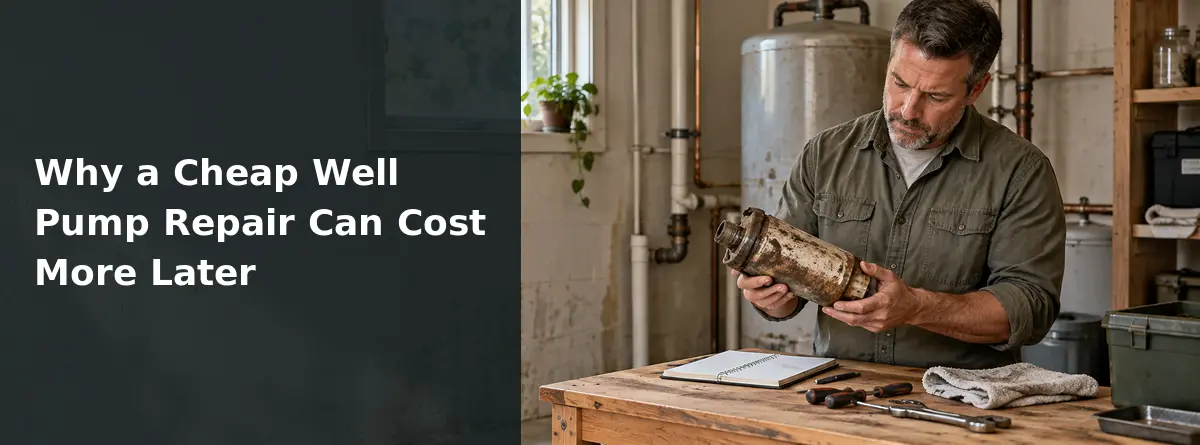
Why a Cheap Well Pump Repair Can Cost More Later
Why the Cheapest Pump Fix May Not Be the Cheapest Choice
A low-cost well pump repair can feel like good news when a home suddenly loses water or the pressure begins to fade. The problem is that a quick fix may address only the part that is easiest to see. If the pump, pressure tank, piping, controls, water level, or another connected component is also involved, the same trouble may return soon after the repair.
That does not mean every repair has to become a major project. Many well-system problems can be corrected without replacing the entire pump. The important question is whether the repair is based on testing and diagnosis or simply on replacing the first part that appears worn.
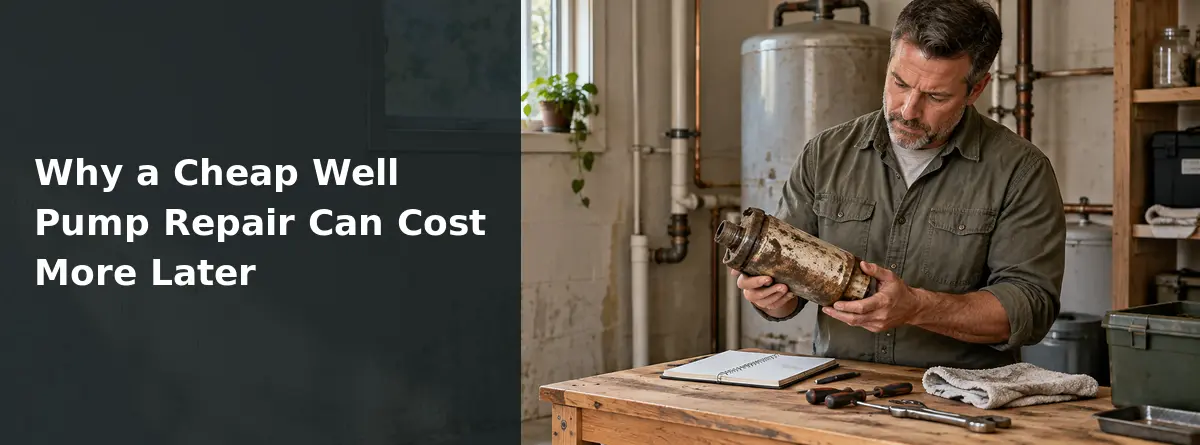
What a Cheap Repair May Leave Undiscovered
A private well system is a group of connected parts. A pump has to work with the pressure tank, pressure switch, piping, valves, electrical controls, and available water supply. A symptom such as low pressure or a pump that runs too long does not identify the failed component by itself.
For example, replacing a visible switch may not solve a problem caused by a damaged wire, a failing pump motor, a blocked connection, a waterlogged tank, or a leak in the system. Replacing a small fitting may stop one drip while water continues to escape somewhere else. A pump that is blamed for every problem may be working harder because another part of the system is not operating correctly.
This is why a professional well pump repair and installation visit should consider the complete system. The goal is not to sell the biggest repair. The goal is to find the cause and match the work to what the equipment actually needs.
How a Shortcut Can Become a Repeat Problem
A temporary repair can create a longer and more expensive chain of problems in several ways:
- The original cause remains: The pump may continue to cycle, run continuously, lose pressure, or struggle to deliver water because the underlying issue was never corrected.
- Related parts take more stress: A pump that runs too often or works against a restriction may place additional strain on the motor, controls, piping, or pressure tank.
- The warning signs become harder to read: A new part can briefly change the symptom without removing the condition that caused it. That can make the next diagnosis more complicated.
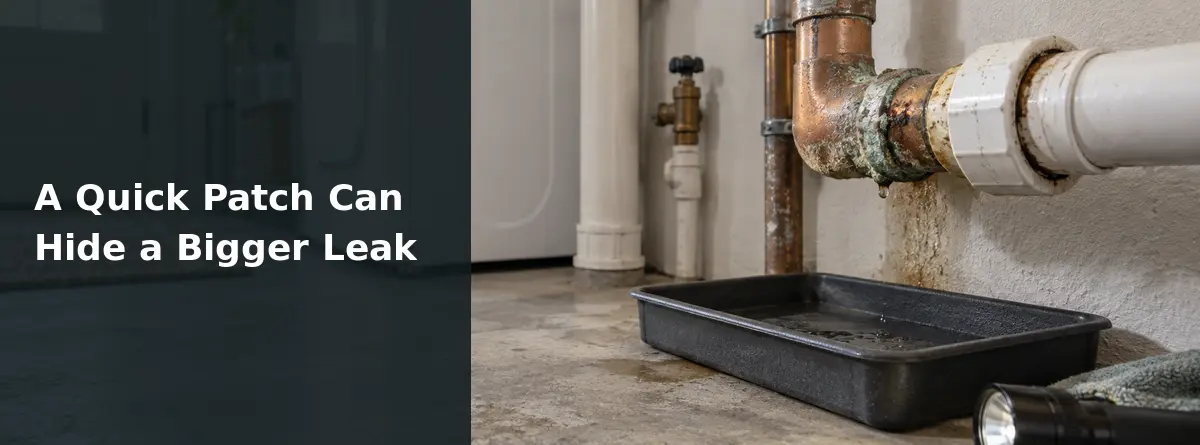
- A small leak becomes hidden damage: Moisture around a connection can affect nearby materials and may point to a larger piping or pressure problem.
- Emergency service becomes more likely: A system that is patched but not fully checked may fail later when the home needs water most.
Signs the Repair Needs a Closer Look
Pay attention when a repair is followed by the same symptom or a new one. A pump that continues running, pressure that pulses, air at the faucet, dirty or discolored water, unusual noise, or a breaker that trips again should not be dismissed as normal after-service behavior.
It is also worth noting whether the problem affects the entire property or only one fixture. A whole-home loss of water points toward the well system, pump, pressure equipment, controls, or supply piping. A single fixture may have a local plumbing problem. That observation can help a technician narrow the possibilities, but it does not replace testing.
Water changes deserve attention as well. Sediment, staining, odor, or a change in taste can have more than one possible cause. These signs do not identify a contaminant by themselves, and water should not be assumed safe to drink without appropriate testing. A pump or pressure problem and a water-quality problem may also be connected, so treating only one symptom can leave the household frustrated.
What Proper Diagnosis Usually Considers
A careful diagnosis starts with the symptoms and the history of the system. Useful information includes when the problem began, whether the pump is silent or running, whether the pressure changes during use, whether the issue appeared after a storm or heavy irrigation demand, and whether previous repairs changed the behavior.
The system may then need to be evaluated as a whole. Depending on the symptoms, that can include the pump, pressure tank, pressure switch, control components, visible piping, valves, water delivery, and other related parts. A good diagnosis also considers whether the proposed repair fits the age and condition of the equipment or whether replacement is the more practical long-term choice.
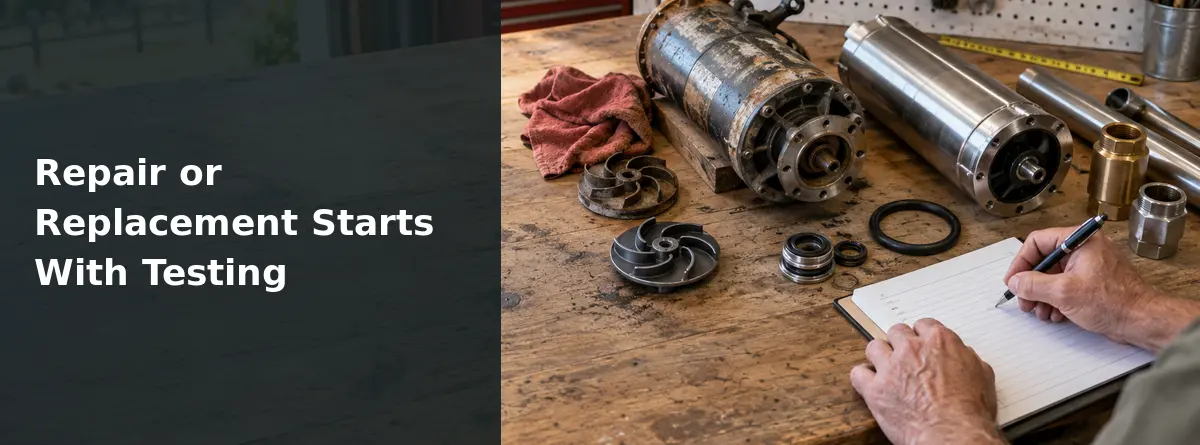
Repair, Replacement, or a Better Repair Plan?
Repair is often reasonable when testing identifies a failed component and the rest of the system is operating as it should. Replacement may make more sense when the pump or another major part is badly worn, repeatedly failing, or being affected by a separate system problem. The right answer depends on what the inspection finds, not on the lowest number attached to the first proposed part.
Ask what failed, how it was confirmed, whether another condition may have contributed, and what signs should be watched after the work. Those questions help separate a focused repair from a guess. They also create a clearer record if the system needs additional attention later.
Homeowners should not open energized controls, handle wet wiring, bypass safety devices, or make pressure adjustments without the proper training. A safe observation, such as noting whether other fixtures have water or whether an obvious breaker has tripped, can be useful. Repeated breaker trips, overheated controls, exposed wiring, or no water throughout the property call for professional help.
Questions to Ask Before Approving the Work
A homeowner does not need to diagnose a well system alone to make a better repair decision. Ask whether the proposed work is intended to correct the cause or only restore operation temporarily. Ask what was tested, what was ruled out, and whether the same symptom could come from the pressure tank, controls, piping, water level, or pump itself.
It is also reasonable to ask what changes should be expected after the repair. Should the pump stop cycling differently? Should pressure stabilize? Should a leak or water-quality symptom be monitored? Clear answers make it easier to recognize whether the system is improving and give the service professional useful information if a related issue appears later. A careful conversation at the start can prevent a homeowner from approving one inexpensive part after another without a clear plan.
Protecting the Investment in Your Well System
The least expensive decision is not always the repair with the smallest first invoice. It is the repair that addresses the actual problem and reduces the chance of paying for the same symptom again. Keeping notes about pressure changes, pump sounds, water appearance, and prior service can help a professional work more efficiently.
Routine attention can also make problems easier to catch before they become no-water emergencies. Jesse's Well Pump & Filtration serves homeowners, rural properties, and businesses in Columbia, Lexington, Gaston, Swansea, Pelion, and surrounding South Carolina communities. If a well pump repair keeps turning into another problem, request a complete evaluation instead of continuing to replace parts by guesswork.
Frequently Asked Questions
Can a cheap well pump repair cause more problems later?
It can if the repair treats only a symptom and leaves the underlying pump, pressure, piping, control, or water-supply problem unresolved.
Does low water pressure always mean the well pump is bad?
No. Low pressure can also involve the pressure tank, switch, piping, valves, controls, water level, or a restriction in the system.
When should a homeowner stop trying quick well pump fixes?
Stop and schedule professional service when the problem returns, the pump runs continuously, a breaker trips again, controls overheat, wiring is exposed, or the property has no water.
Is a pump replacement always better than a repair?
No. Replacement should follow testing that shows the pump or another major component cannot be repaired reliably or is being affected by a larger system problem.
Can water staining or odor prove that well water is unsafe?
No. Appearance, odor, and taste do not identify a contaminant. Appropriate water testing is needed before making a safety decision.