
Why a Well Pump May Lose Prime After Sitting Unused
First Starts After a Long Break Often Fail
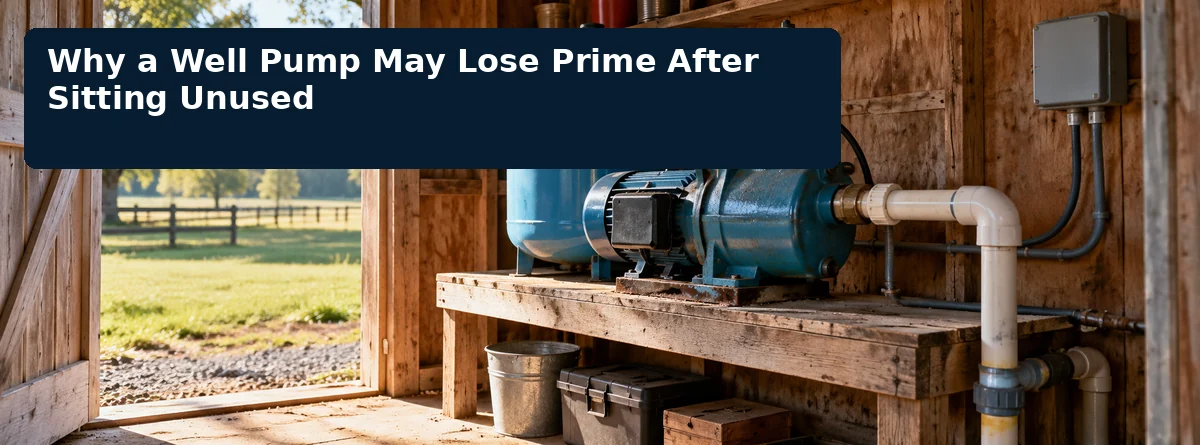
A well pump that worked previously might not deliver water after a property is left unused for a while. Lost prime, where water leaves the pump or suction line and air gets in, is one possible reason. This is mostly an issue for above-ground jet pumps and suction-lift pumps. Submersible pumps are below the water level and do not usually need this.
Being away is not usually the main problem. A small leak or bad valve can cause the system to lose water while it sits unused. When someone comes back and uses the faucet, they might notice sputtering, weak flow, or no water.
What Changes While the Pump Is Idle?
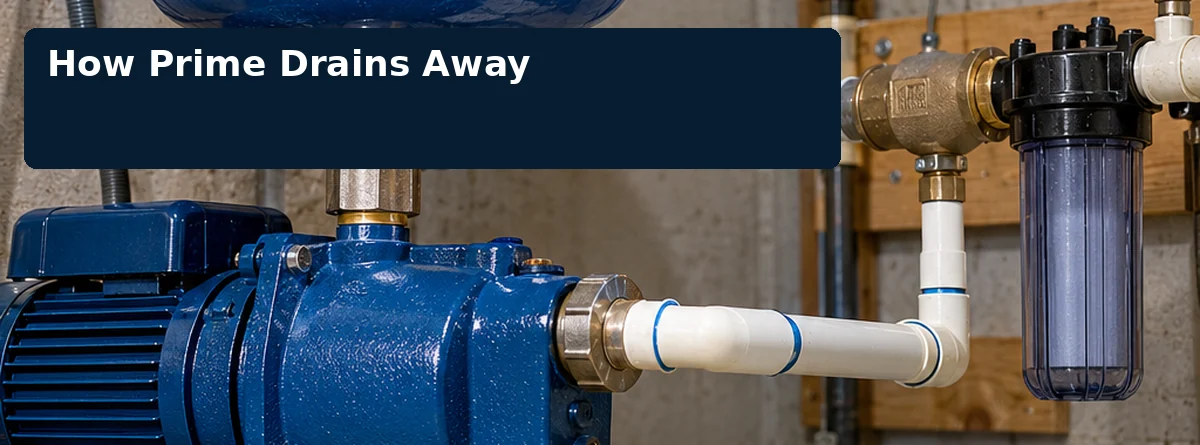
An above-ground jet pump has water in its casing and suction line when working. A foot valve or check valve is supposed to stop water from flowing backward. If the valve leaks, water drains out, and the next time the pump runs, it may not work well because there is too much air.
A small opening on the suction side can also let air in. Even if the pipe looks dry, air can still get inside and cause problems with the pump keeping its prime.
A Leaking Foot Valve or Check Valve
These valves are supposed to hold water when the pump is off. If they wear out, water can leak back. The longer the system is off, the more water may be lost. Repriming will only work for a short time if the valve is not fixed.
Air Entering Through a Suction Connection
Air can get in through old fittings, seals, or damaged pipes. Changes in temperature can make these leaks worse. Sometimes, finding leaks is hard if pipes are buried.
Water Level Falling Below the Intake
Sometimes, the water level in the well drops too low, especially after heavy use. If this happens, air can get into the system. Starting the pump over and over will not fix this. A professional should check if this is the problem.
Clues That Help Narrow Down the Cause
There is no one sign that shows a pump lost prime. Sometimes the pump runs but does not give water because of a clog, a broken part, or low water in the well. Looking at the overall pattern helps more than just listening to the motor.
- Fails after sitting: A leak in a valve is more likely if the pump only fails after being unused.
- Sputtering before water: Air might be in the pipes somewhere.
- Weak flow: There could be leaks, low water, or problems in the pump.
- Pump runs but no pressure: Stop using it and get it checked.
- Tripping or overheating: This may be an electrical or motor problem, not just lost prime.
If the pump does not start at all, look for other advice instead of assuming it lost prime.
Safe Checks Before Requesting Service
First, check which fixtures have problems. If only one has weak flow, it might just be that faucet. If all have problems, see if the pump is running and how long the place was empty.
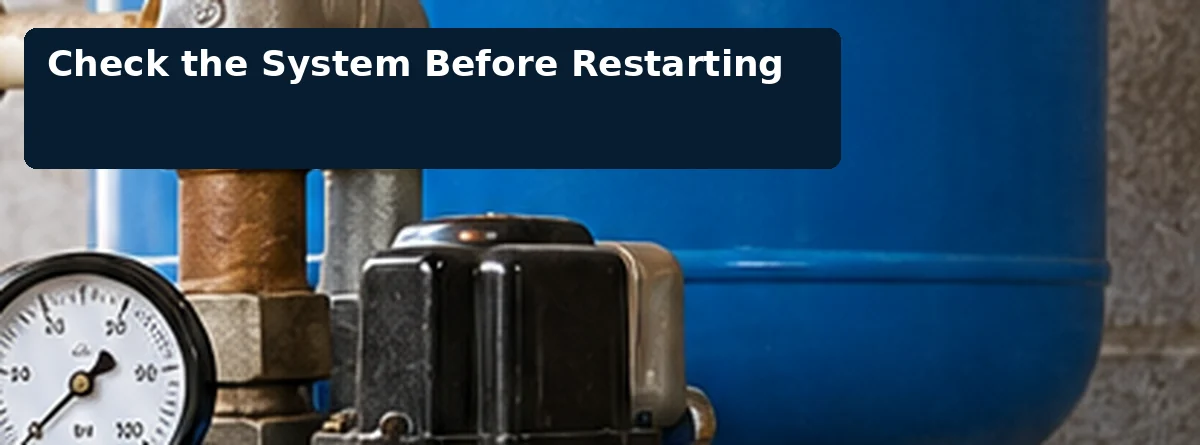
Check if a circuit breaker has tripped, but do not keep resetting it or open any control boxes. If the pump runs without water, turn it off and call for service since it could get damaged.
Tell the technician how long the system was unused, what type of pump you have, and if there was any recent work. Pictures from outside equipment can help too.
Why Repriming Alone May Not Be a Lasting Repair
Repriming is putting water back in the pump so it can work. The steps depend on the setup. If you do not know how, let a technician do it. Do not run a dry pump.
If repriming works, it only shows that the pump can move water now. If a valve or joint is still bad, the problem will come back. A professional can check these things.
If the pump works but water service is still not steady, look for help with inspections or repairs.
Preparing a Seasonal or Occasionally Used Property
Places that are not used often, like seasonal homes or farms, need different care than homes used every day. Check for pressure problems before leaving for a long time. If pressure drops often, get it checked before leaving.
When you return, look for water damage and make sure the area is dry before touching controls. Do not think the pump is working just because it makes noise. In winter, make sure pipes are protected from freezing.
Irrigation pumps may also lose prime after not being used for a season. They are different from household pumps, so check different advice if only irrigation is affected.
Know Which Pump You Actually Have
Before following advice, find out what kind of pump you have. Above-ground jet pumps, deep-well jet pumps, and submersible pumps are all different. The causes and fixes are not the same for all.
If the system keeps losing water, the pump runs all the time, or the pressure does not come back, ask a professional for help. Telling them the full story will help them find the problem faster.
Frequently Asked Questions
Does every well pump need to be primed after sitting unused?
No. Above-ground jet pumps may lose prime, but submersible pumps normally remain underwater and are not manually primed the same way.
Can a bad foot valve cause prime to disappear overnight?
Yes. A leaking foot valve may allow water in the suction line to drain back while the pump is idle.
Why does my pump run but not deliver water after a vacation?
Air in the suction line, a leaking valve, a low water level, a restriction, or a mechanical problem can cause that symptom. Stop prolonged dry operation and arrange diagnosis.
Will repriming fix the pump permanently?
Not if a leaking valve, suction air leak, or water-level problem still exists; the root cause must be addressed.